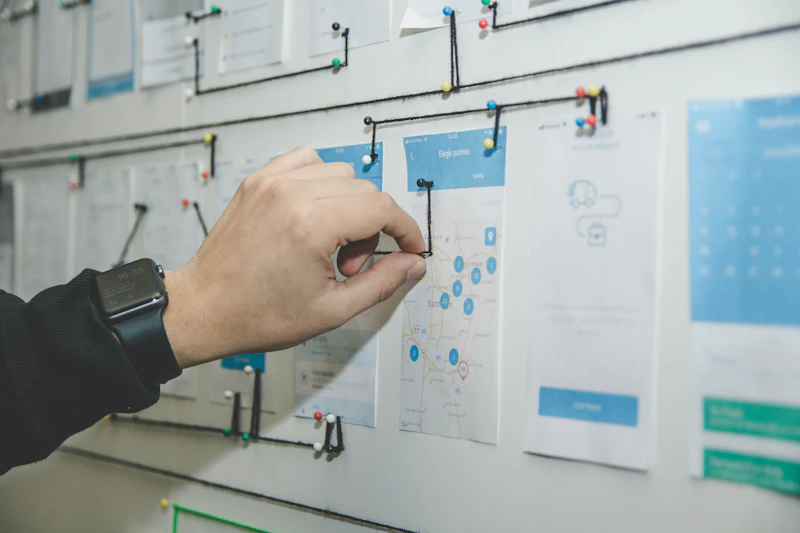
From first sketch to launch: running a design project that lands on time.
Most design projects that run late were late before the first sketch. A practical guide to the four stages we use, and the decisions that keep each one moving.

Design projects rarely fail because the designers were not good enough. They fail because the wrong question was answered beautifully, or because the right answer waited three weeks for a decision nobody owned.
After many years of shipping identities, products and campaigns, we run every engagement through the same four stages. The stages are not unusual. What matters is the handful of decisions that must be made inside each one, by whom, and by when.
Stage one: discover
Discovery is where the real brief gets written. The brief you send a studio is a starting point; the brief that guides the work comes from talking to customers, sales teams, engineers and the people who will live with the result.
- Name one decision-maker who can say yes, and one who can say no.
- Agree what success looks like in numbers someone outside design will recognise.
- List what is fixed: deadlines, budgets, technology, legal limits.
- Write down what is out of scope, so it stays out.
Discovery should take days or a few weeks, not months. Its output is a one-page brief that everyone signs. If the signatures will not come, the project is not ready to start, and it is far cheaper to learn that now.
Stage two: define
Definition turns the brief into a direction. We show a small number of clearly different routes, each argued in plain words, and help the decision-maker pick one. Showing ten routes feels generous and creates paralysis. Showing one feels efficient and creates doubt. Two or three is almost always right.
The most important rule at this stage: decide in the room. A route that goes away for a fortnight of internal circulation comes back with every opinion in the building attached to it.
Most delays are not in the doing. They are in the waiting between decisions.
Stage three: design and build
This is the stage people picture when they think of design, and it should be the calmest. With the direction agreed, the team designs, prototypes and builds in short cycles, showing real work every week rather than polished reveals every month.
- Agree a weekly review slot at the start and protect it.
- Show work in its real context: on a phone, on a shelf, in a feed.
- Collect feedback in one place and resolve conflicting comments before they reach the designers.
- Test with real people early, while changes are still cheap.
- Freeze the scope two weeks before launch; new ideas go on a list for phase two.
Weekly reviews feel slower at first. They are much faster overall, because nobody spends a month polishing work that was heading in the wrong direction.
Stage four: launch and care
Launch is not the end of a design project, it is the moment it meets reality. We plan the first ninety days after launch as carefully as the weeks before it: measuring the success numbers agreed in discovery, fixing what real use reveals and training the teams who will carry the work forward.
- Hand over files, systems and guidelines in the tools your teams already use.
- Run short training sessions for everyone who will produce work in the new system.
- Review the success measures at thirty, sixty and ninety days.
- Keep a channel open for questions, because the best questions arrive after launch.
What we ask of clients
A studio can only move as fast as the decisions it receives. Before we start, we ask every client for three things. First, a named decision-maker who attends the key reviews in person rather than reading notes afterwards. Second, access to real customers and the people who serve them, because the best insights rarely come from the brief. Third, honesty about constraints, including the awkward ones: the board member with strong views, the system that cannot change this year, the budget that is really smaller than it looks.
None of this is unusual, and none of it is about control. It simply removes the hidden delays that turn a twelve-week project into a six-month one. In return we commit to showing real work every week, explaining every recommendation in plain words and flagging risks the moment we see them.
Early warning signs
Every late project we have rescued showed the same signals early. If you notice two or more, stop and fix them before doing more design work.
- The brief has changed but nobody has rewritten it.
- Feedback arrives from people who were not in the last review.
- Reviews are cancelled more often than they happen.
- The launch date is fixed but the decision-maker is not.
None of this needs special software or a large team. It needs clear ownership, short loops and the discipline to decide. The matrix below shows how the four stages fit together in our own work.